
Introduction
अक्सर ऐसा होता है कि व्यक्ति पुलिस के पास FIR दर्ज कराने जाता है, लेकिन पुलिस FIR दर्ज करने से मना कर देती है या टालमटोल करती है। ऐसे मामलों में आम नागरिक के मन में यह सवाल आता है कि अब आगे क्या किया जाए?
भारतीय कानून में पुलिस के अलावा Magistrate को भी शिकायत (complaint) करने का अधिकार दिया गया है। यदि FIR दर्ज नहीं हो रही है, तो व्यक्ति सीधे Judicial Magistrate के पास शिकायत कर सकता है।
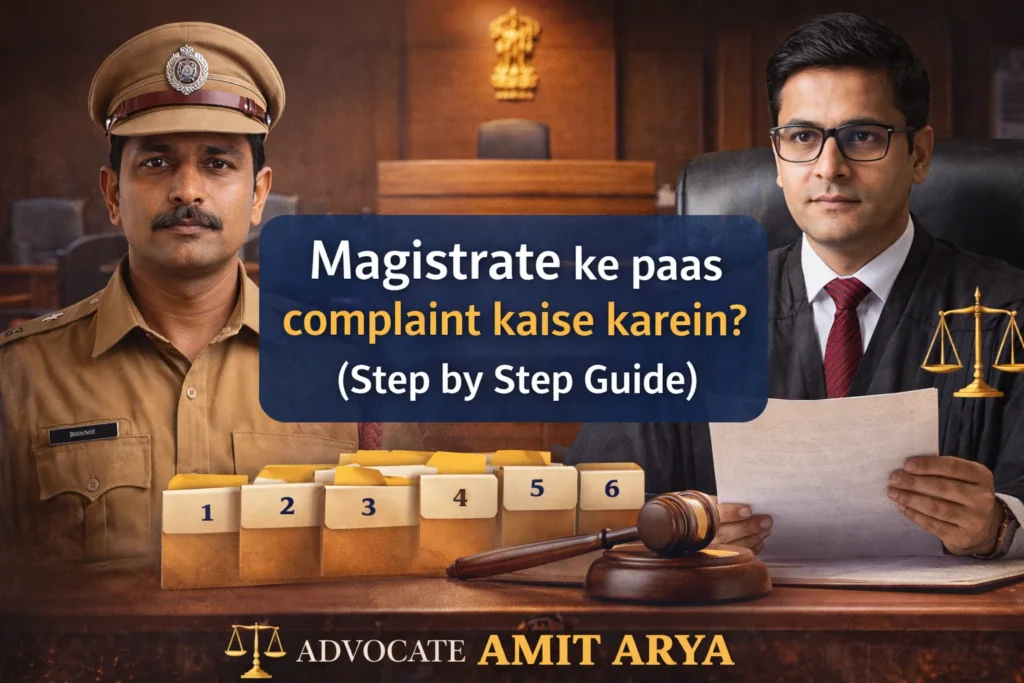
यह ब्लॉग आपको step by step बताएगा कि Magistrate ke paas complaint kaise karein, कौन-से documents लगते हैं, क्या procedure है और court क्या orders दे सकती है।
FIR दर्ज न होने की स्थिति में Magistrate क्यों महत्वपूर्ण है?
पुलिस FIR दर्ज करने से मना कर सकती है, लेकिन:
- Magistrate एक independent judicial authority है
- Magistrate पुलिस को FIR दर्ज करने और investigation का आदेश दे सकता है
- Magistrate स्वयं complaint का cognizance ले सकता है
इसी कारण, Magistrate के पास complaint करना एक effective legal remedy है।
➡️ इस विषय को विस्तार से समझने के लिए हमारा ब्लॉग पढ़ें:
FIR दर्ज न हो तो क्या करें
Step 1: यह तय करें कि मामला Magistrate के पास ले जाने योग्य है या नहीं
सबसे पहले यह समझना ज़रूरी है कि हर मामला Magistrate के पास नहीं ले जाया जाता।
Magistrate के पास complaint तब की जाती है जब:
- FIR दर्ज नहीं की गई हो
- मामला cognizable offence से जुड़ा हो
- पुलिस निष्क्रिय या पक्षपाती हो
- शिकायतकर्ता के पास prima facie evidence हो
यदि मामला trivial (less importance) या purely civil nature का है, तो Magistrate complaint स्वीकार नहीं कर सकता।
Step 2: Written Complaint तैयार करें
Magistrate के पास जाने से पहले एक proper written complaint तैयार करनी होती है।
Complaint में क्या-क्या होना चाहिए:
- शिकायतकर्ता का नाम और पता
- आरोपी का नाम (यदि ज्ञात हो)
- घटना की तारीख, समय और स्थान
- पूरी घटना का factual narration
- यह उल्लेख कि FIR दर्ज नहीं की गई
- Relief की मांग (FIR registration / investigation)
Complaint हमेशा simple, factual और बिना exaggeration के होनी चाहिए।
Step 3: Supporting Documents और Evidence लगाएँ
Magistrate केवल oral statement के आधार पर आदेश नहीं देता। Complaint के साथ supporting material लगाना बहुत महत्वपूर्ण है।
आमतौर पर लगने वाले documents:
- Police complaint की copy
- Written representation to SHO
- Medical report (यदि injury का मामला हो)
- Call records / messages / documents
- Witness details
Evidence जितना मजबूत होगा, Magistrate द्वारा आदेश देने की संभावना उतनी अधिक होगी।
Step 4: Magistrate के समक्ष Complaint दाखिल करें
अब complaint और documents को Judicial Magistrate First Class (JMFC) के समक्ष file किया जाता है।
Magistrate के पास complaint दो प्रकार से हो सकती है:
- Direct complaint by complainant
- Complaint through advocate
Court fee और procedural requirements court-wise अलग हो सकती हैं।
Step 5: Magistrate द्वारा शिकायत की जांच
Complaint दाखिल होने के बाद Magistrate निम्न विकल्पों में से कोई एक अपना सकता है:
Option 1: Police investigation का आदेश
Magistrate पुलिस को निर्देश दे सकता है कि:
- FIR दर्ज की जाए
- Proper investigation की जाए
यह स्थिति तब आती है जब Magistrate को prima facie cognizable offence दिखाई देता है।
Option 2: Preliminary inquiry
कुछ मामलों में Magistrate:
- Complainant का बयान रिकॉर्ड करता है
- Witnesses की examination करता है
इसके बाद ही आगे का आदेश देता है।
Option 3: Complaint dismiss करना
यदि Magistrate को लगता है कि:
- मामला frivolous है
- कोई offence नहीं बनता
तो complaint dismiss भी की जा सकती है।
Step 6: Magistrate के आदेश के बाद आगे की प्रक्रिया
यदि Magistrate FIR दर्ज करने का आदेश देता है, तो:
- Police FIR दर्ज करने के लिए बाध्य होती है
- Investigation शुरू होती है
- Case normal criminal procedure में आगे बढ़ता है
यदि complaint dismiss हो जाती है, तो:
- Revision या higher court remedy उपलब्ध रहती है
Zero FIR का Magistrate Complaint से क्या संबंध है?
कई बार पुलिस FIR यह कहकर मना कर देती है कि मामला उनके jurisdiction का नहीं है। ऐसे मामलों में Zero FIR का concept लागू होता है।
➡️ Zero FIR की पूरी जानकारी के लिए पढ़ें:
Zero FIR
Magistrate यह देखता है कि:
- Offence cognizable है या नहीं
Jurisdiction बाद की प्रक्रिया है, FIR दर्ज होना प्राथमिक है
Let’s first understand what is ZERO FIR?
Practical Mistakes जो लोग करते हैं
- Oral complaint पर निर्भर रहना
- Evidence attach न करना
- Over-drafted या emotional complaint
- Proper legal provision mention न करना
- गलत court में complaint file करना
इन गलतियों से बचना बहुत ज़रूरी है।
Magistrate Complaint vs Police Complaint
Police Complaint | Magistrate Complaint |
Executive authority | Judicial authority |
FIR दर्ज न भी हो | FIR का आदेश दे सकता है |
Discretionary | Judicially supervised |
Exam & Practical Importance
यह टॉपिक:
- Judiciary exams
- Law entrance exams
- Practical legal awareness
तीनों के लिए अत्यंत महत्वपूर्ण है।
Hindi Law Shorts eBooks – For Better Understanding
अगर आप FIR, Magistrate powers, police procedure और criminal law topics को simple, exam-oriented format में detail में समझना चाहते हैं, तो Hindi Law Shorts की eBooks ज़रूर explore करें।
ये eBooks law students, judiciary aspirants और legal awareness के लिए specially designed हैं।
👉 Available at: Hindi Law Shorts
MCQs: Magistrate ke Paas Complaint Procedure (10 Questions)
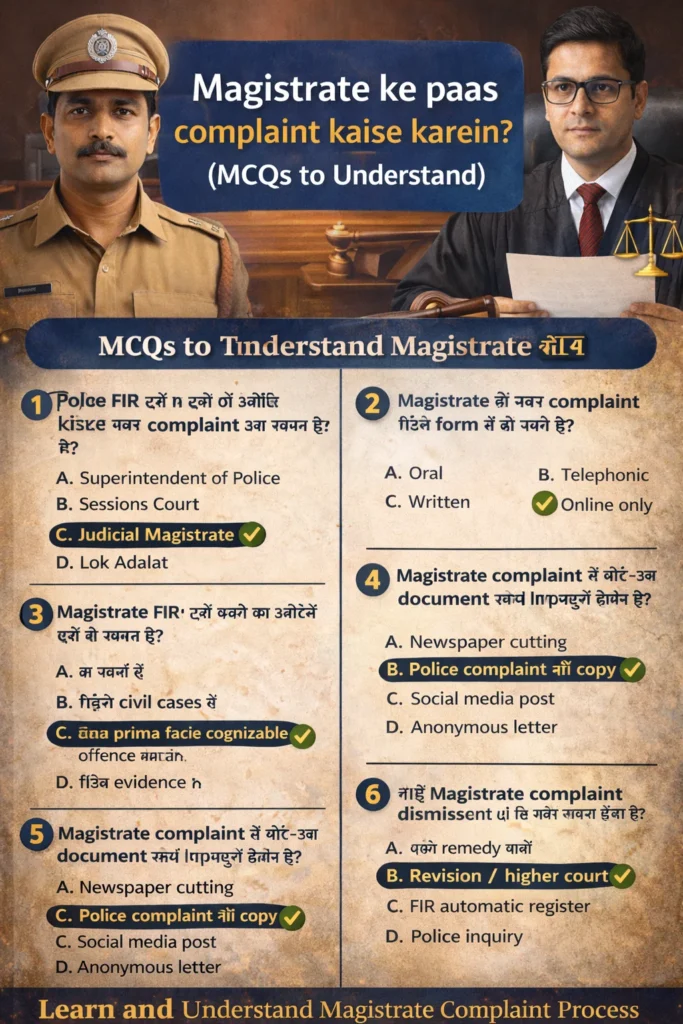
MCQ 1
पुलिस FIR दर्ज न करे तो व्यक्ति किसके पास complaint कर सकता है?
A. Superintendent of Police
B. Sessions Court
C. Judicial Magistrate
D. Lok Adalat
Correct Answer: C
MCQ 2
Magistrate के पास complaint किस form में दी जाती है?
A. Oral
B. Telephonic
C. Written
D. Online only
Correct Answer: C
MCQ 3
Magistrate FIR दर्ज करने का आदेश कब दे सकता है?
A. हर मामले में
B. केवल civil cases में
C. जब prima facie cognizable offence बनता हो
D. बिना evidence के
Correct Answer: C
MCQ 4
Magistrate complaint में कौन-सा document सबसे महत्वपूर्ण होता है?
A. Newspaper cutting
B. Police complaint की copy
C. Social media post
D. Anonymous letter
Correct Answer: B
MCQ 5
Magistrate द्वारा police investigation का आदेश किस स्थिति में दिया जाता है?
A. जब complainant मांग करे
B. जब offence cognizable हो
C. हर private complaint में
D. बिना सुनवाई के
Correct Answer: B
MCQ 6
यदि Magistrate complaint dismiss कर दे तो आगे क्या remedy होती है?
A. कोई remedy नहीं
B. Revision / higher court
C. FIR automatic register
D. Police inquiry
Correct Answer: B
MCQ 7
Zero FIR का मुख्य उद्देश्य क्या है?
A. FIR delay करना
B. Jurisdiction की बाधा हटाना
C. Police discretion बढ़ाना
D. Court process रोकना
Correct Answer: B
MCQ 8
Magistrate complaint में evidence क्यों जरूरी होता है?
A. Police convenience के लिए
B. Court fee तय करने के लिए
C. Prima facie case establish करने के लिए
D. Accused को punish करने के लिए
Correct Answer: C
MCQ 9
Magistrate complaint किस court में file की जाती है?
A. High Court
B. Sessions Court
C. Judicial Magistrate First Class
D. Lok Adalat
Correct Answer: C
MCQ 10
Magistrate complaint का सबसे बड़ा advantage क्या है?
A. Free legal aid
B. Faster trial
C. Judicial supervision
D. Automatic conviction
Correct Answer: C
Conclusion
जब पुलिस FIR दर्ज करने से मना कर दे, तो कानून व्यक्ति को helpless नहीं छोड़ता। Magistrate ke paas complaint एक मजबूत और प्रभावी legal remedy है। यदि complaint सही तरीके से, proper documents और facts के साथ दायर की जाए, तो Magistrate पुलिस को FIR दर्ज करने और investigation का आदेश दे सकता है।
हर नागरिक को यह जानना चाहिए कि कानून केवल पुलिस तक सीमित नहीं है, बल्कि न्यायालय भी उसकी रक्षा के लिए मौजूद है।