
Introduction
Police custody aur judicial custody ka naam hum aksar news, movies aur court cases me sunte hain. Lekin bahut se log aur students in dono ko ek hi samajh lete hain. Ye ek common confusion topic hai, jo judiciary exams aur law entrance exams me baar-baar poocha jaata hai.
Is blog me hum bilkul simple Hindi me samjhenge ki police custody kya hoti hai, judicial custody kya hoti hai, dono me kya difference hai, aur exam ke liye kaun-kaun se points yaad rakhna zaruri hai.
Custody ka simple matlab
Custody ka simple matlab hota hai kisi vyakti ko kanoon ke tahat apne control me rakhna. Jab kisi accused ko arrest kiya jaata hai, to use custody me rakha jaata hai.
Indian criminal law me custody mainly do type ki hoti hai:
- Police Custody
- Judicial Custody
Police Custody kya hoti hai?
Police custody ka matlab hota hai jab accused police ke control me hota hai. Is dauran accused police station me ya police ke saath rehta hai.
Police custody ka main purpose investigation hota hai, jaise:
- Accused se sawal-jawab karna
- Chori ka maal ya weapon recover karna
- Crime ke baare me poori information lena
Police custody me police ko accused se direct questioning karne ka adhikar hota hai.
Police Custody ka legal rule
Arrest ke baad police accused ko 24 ghante ke andar Magistrate ke saamne present karti hai. Sirf Magistrate hi police custody ka order de sakta hai.
Police apni marzi se police custody nahi rakh sakti. Agar Magistrate ko lagta hai ki investigation ke liye zarurat hai, tabhi police custody di jaati hai.
Police Custody ki maximum limit
Ye exam ke liye bahut important point hai:
- Police custody maximum 15 din ki hoti hai
- Ye 15 din sirf arrest ke first 15 din ke andar hi liye ja sakte hain
- 15 din ke baad police custody nahi di ja sakti
Judicial Custody kya hoti hai?
Judicial custody ka matlab hota hai jab accused police ke control se bahar hokar jail authority ke control me chala jaata hai.
Judicial custody me accused jail me rakha jaata hai. Is dauran police accused se direct questioning nahi kar sakti.
Judicial custody ka main purpose hota hai:
- Accused ko safe jagah par rakhna
- Evidence ke saath chedchad se bachana
- Court ke saamne accused ki presence ensure karna
Judicial Custody ka legal rule
Jab Magistrate ko lagta hai ki police custody ki zarurat nahi hai, tab judicial custody ka order diya jaata hai.
Judicial custody me accused jail superintendent ke control me hota hai, police ke nahi.
Judicial Custody ki maximum limit
Judicial custody ki limit offence ki seriousness par depend karti hai:
- Serious offences me 90 din
- Less serious offences me 60 din
Agar itne din ke andar charge sheet file nahi hoti, to accused default bail ka haq maang sakta hai.
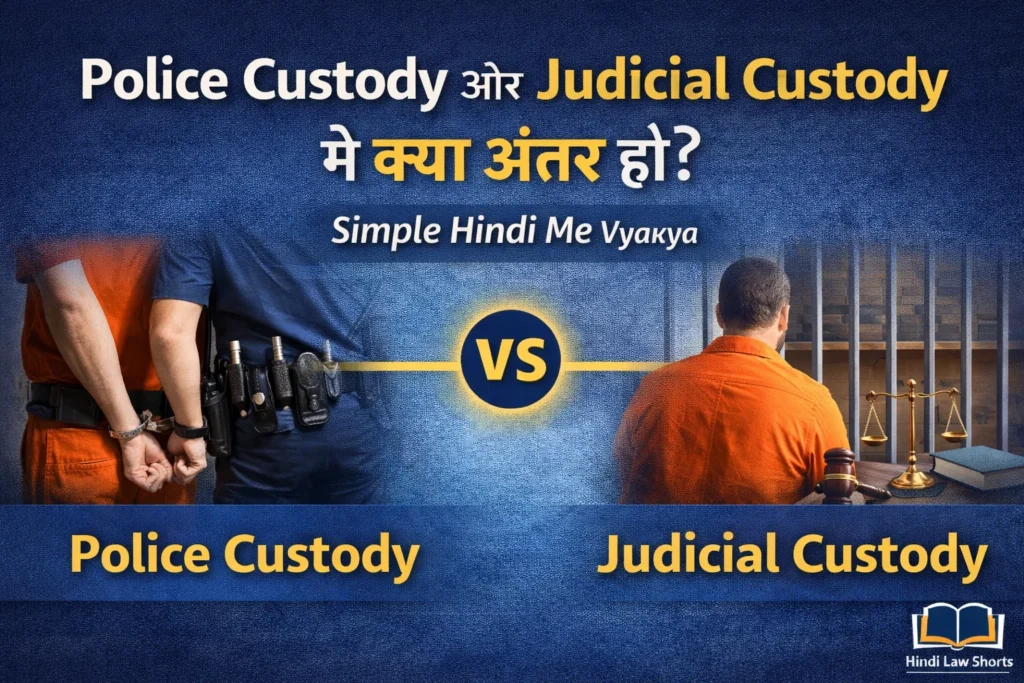
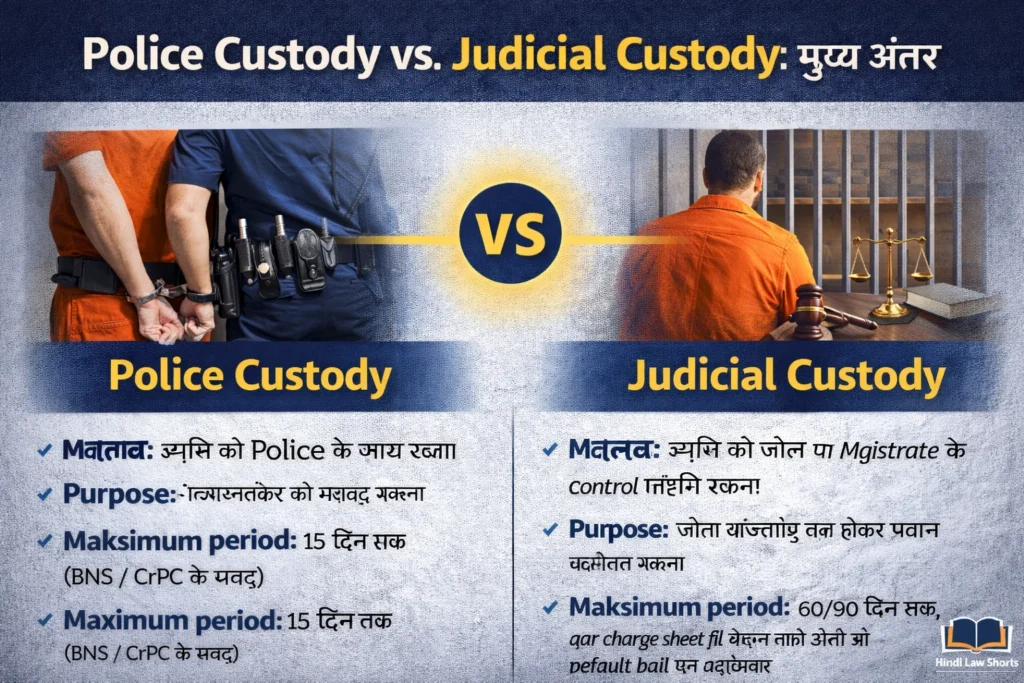
Police Custody aur Judicial Custody me antar
Police custody aur judicial custody ke beech basic difference samajhna zaruri hai.
Police custody me accused police ke paas hota hai aur investigation hoti hai. Judicial custody me accused jail me hota hai aur police questioning allowed nahi hoti.
Police custody short time ke liye hoti hai, jabki judicial custody lambi avadhi ke liye ho sakti hai.
Difference Table (Exam Friendly)
Point | Police Custody | Judicial Custody |
Control | Police | Jail Authority |
Purpose | Investigation | Safe custody |
Maximum Period | 15 din | 60/90 din |
Police questioning | Allowed | Not allowed |
Order by | Magistrate | Magistrate |
Police Custody aur Fundamental Rights
Police custody ke dauran accused ke fundamental rights bahut important hote hain:
- Article 20(3): Self-incrimination se protection
- Article 21: Life aur personal liberty ka right
Police torture ya third-degree methods allowed nahi hain. Supreme Court ne D.K. Basu guidelines ke through in rights ko protect kiya hai.
Judicial Custody aur Bail ka relation
Judicial custody ka bail se direct relation hota hai. Accused judicial custody me rehkar regular bail ya default bail apply kar sakta hai.
Bail ko achhe se samajhne ke liye Bail se related blog padhein.
Police Custody aur Arrest ka relation
Police custody hamesha arrest ke baad hi di jaati hai. Isliye arrest ke concept ko samajhna bhi bahut zaruri hai.
Is topic ke liye Arrest se related blog bhi padhna useful rahega.
Exam Tips
- Police custody maximum 15 din hoti hai
- 15 din ke baad police custody allowed nahi hai
- Judicial custody me police questioning nahi hoti
- Charge sheet late hone par default bail mil sakti hai
Do you know what is chargesheet?
Let’s read about the chargesheet also to get fully updated about the process.
Exam Preparation Recommendation
Arrest, custody aur bail jaise important topics ko exam-oriented aur simple tareeke se samajhne ke liye Hindi Law Shorts ke eBooks website par available hain, jo judiciary aspirants ke liye specially banaye gaye hain.
Multiple Choice Questions (MCQs)
- Police custody ki maximum avadhi kya hoti hai?
(a) 7 din
(b) 15 din
(c) 30 din
(d) 60 din - Judicial custody me accused kiske control me hota hai?
(a) Police
(b) Magistrate
(c) Jail authority
(d) Prosecutor - Police custody ka order kaun deta hai?
(a) Police officer
(b) Magistrate
(c) Jail superintendent
(d) Prosecutor - Judicial custody me police questioning hoti hai ya nahi?
(a) Haan
(b) Nahi
(c) Magistrate ki permission se
(d) Sirf serious offence me - Default bail kab milti hai?
(a) Police custody me
(b) Judicial custody me
(c) House arrest me
(d) Preventive detention me - Article 20(3) kis se related hai?
(a) Equality
(b) Self-incrimination
(c) Speech
(d) Religion - Judicial custody ki limit kis par depend karti hai?
(a) Police
(b) Magistrate
(c) Offence ki nature
(d) Accused ki marzi - Police custody ke baad aam taur par kya hota hai?
(a) Bail
(b) Judicial custody
(c) Parole
(d) Preventive detention - Police custody ka main purpose kya hai?
(a) Punishment
(b) Investigation
(c) Trial
(d) Appeal - Judicial custody ka main purpose kya hai?
(a) Interrogation
(b) Recovery
(c) Safe custody
(d) Confession
- Police custody ki maximum avadhi kya hoti hai?
MCQs Answer Key (with Correct Options)
- (b) 15 din
- (c) Jail authority
- (b) Magistrate
- (b) Nahi
- (b) Judicial custody me
- (b) Self-incrimination
- (c) Offence ki nature
- (b) Judicial custody
- (b) Investigation
- (c) Safe custody
Conclusion
Police custody aur judicial custody me antar samajhna criminal law ka basic concept hai. Police custody investigation ke liye hoti hai aur limited time ke liye di jaati hai, jabki judicial custody accused ko jail me court ke supervision me rakhne ke liye hoti hai.
Judiciary exams ke liye ye topic bahut scoring hai. Agar aap ye difference clear rakhte hain, to arrest aur bail jaise topics bhi aasani se samajh aa jaate hain.