
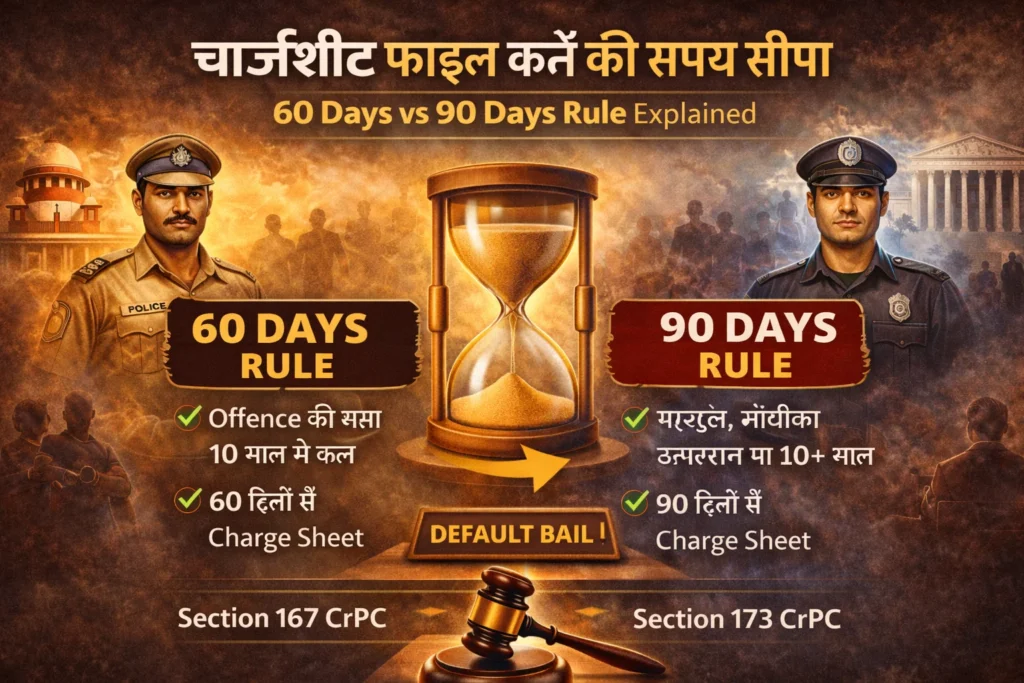
Time Limit for Filing Charge Sheet: 60 Days vs 90 Days Rule Explained
Criminal procedure में एक बहुत महत्वपूर्ण प्रश्न है – Police को Charge Sheet कितने समय के अंदर file करनी होती है?
Judiciary exams, law students, और practice में यह topic बार-बार पूछा जाता है। यदि Police समय सीमा के अंदर Charge Sheet file नहीं करती, तो accused को एक विशेष अधिकार मिलता है, जिसे हम Default Bail कहते हैं।
इस blog में हम विस्तार से समझेंगे:
- Charge Sheet क्या है
- Investigation की time limit क्या है
- 60 days rule क्या है
- 90 days rule क्या है
- Default Bail क्या है
- Court का role क्या है
यह पूरा विषय CrPC के अंतर्गत regulated है।
Charge Sheet क्या होती है?
जब Police investigation पूरी कर लेती है, तब वह Court में एक final report file करती है, जिसे आम भाषा में Charge Sheet कहा जाता है।
यह report generally Section 173 CrPC के तहत file की जाती है।
Charge Sheet में शामिल होता है:
- Accused का नाम
- Offence का विवरण
- Evidence की list
- Witnesses की list
- Documents
Charge Sheet file होने के बाद case trial की ओर बढ़ता है।
Investigation के दौरान Custody और Time Limit
जब किसी व्यक्ति को arrest किया जाता है, तो Police unlimited time तक उसे custody में नहीं रख सकती। यदि investigation 24 hours में complete नहीं होती, तो Police accused को Magistrate के सामने produce करती है।
Magistrate Police Custody या Judicial Custody allow कर सकता है। लेकिन investigation के लिए maximum time limit तय है। यहीं से 60 days और 90 days rule शुरू होता है।
60 Days Rule क्या है?
यदि offence की punishment:
- 10 साल से कम है
या - Lesser gravity offence है
तो Police को 60 days के अंदर Charge Sheet file करनी होगी। यदि 60 days के अंदर Charge Sheet file नहीं होती, तो accused को Default Bail का अधिकार मिल जाता है।
90 Days Rule क्या है?
यदि offence की punishment:
- Death Penalty
- Life Imprisonment
- या 10 साल या उससे अधिक की imprisonment
तो Police को 90 days का समय मिलता है Charge Sheet file करने के लिए। यदि 90 days के अंदर Charge Sheet file नहीं होती, तो accused को Default Bail का अधिकार मिलता है।
Default Bail क्या है?
Default Bail को कभी-कभी Statutory Bail भी कहा जाता है। यह bail Court की discretion पर नहीं, बल्कि law के force से मिलती है।
इसका मतलब:
यदि 60 days या 90 days की period expire हो गई और Charge Sheet file नहीं हुई तो accused bail मांग सकता है।
Court को bail देना पड़ेगा, यदि:
- Accused bail application file करे
- Bail bond furnish करे
यह accused का legal right है।
Important Point: Bail Automatic नहीं मिलती
यह समझना बहुत जरूरी है कि:
Time limit expire होने से bail automatic नहीं मिलती।
Accused को:
- Bail application file करनी होगी
- Bail conditions पूरी करनी होंगी
यदि accused application file नहीं करता और बाद में Charge Sheet file हो जाती है, तो Default Bail का right खत्म हो सकता है।
Example से समझते हैं
मान लीजिए:
Ramesh पर एक ऐसा offence लगा है जिसकी maximum punishment 7 years है।
Police ने उसे 1 January को arrest किया। अब Police को 60 days के अंदर Charge Sheet file करनी होगी। यदि 2 March तक Charge Sheet file नहीं हुई, तो Ramesh Default Bail मांग सकता है।
अब दूसरा example:
Suresh पर murder का आरोप है। Murder की punishment Life Imprisonment या Death Penalty है।
यहाँ Police को 90 days का समय मिलेगा। यदि 90 days के अंदर Charge Sheet file नहीं हुई, तो Suresh Default Bail मांग सकता है।
Court का Role
Magistrate को ensure करना होता है कि:
- Custody illegal न हो
- Time limit strictly follow हो
Supreme Court ने कई judgments में कहा है कि Default Bail accused का valuable right है। यदि statutory period complete हो गई है, तो Court को accused के right को protect करना चाहिए।
क्या Time Extension Possible है?
Normal CrPC offences में:
- 60 days और 90 days की limit strict है।
लेकिन कुछ special laws जैसे:
- NDPS Act
- UAPA
इनमें investigation period extend किया जा सकता है Court की permission से लेकिन सामान्य criminal cases में CrPC की time limit लागू होती है।
Default Bail और Regular Bail में Difference
Default Bail:
- Time limit expire होने पर मिलती है
- Accused का statutory right है
Regular Bail:
- Court merits देखकर decide करती है
- Offence की gravity, evidence, etc. consider होता है
यह difference judiciary exams में बहुत important है।
क्या Charge Sheet Late File होने पर Case खत्म हो जाता है?
नहीं।
यदि Police delay करती है:
- Accused को Default Bail मिल सकता है
लेकिन - Case खत्म नहीं होता
Trial continue रहेगा। Accused bail पर रहेगा, लेकिन prosecution case चलेगा।
Practical Importance for Judiciary Aspirants
Judiciary exams में अक्सर पूछा जाता है:
- Section 167 CrPC क्या कहता है?
- 60 days और 90 days rule में difference क्या है?
- Default Bail कब मिलती है?
- क्या right absolute है?
इसलिए Bare Act की language समझना बहुत जरूरी है।
Common Mistakes Students Make
- 60 और 90 days confuse करना
- Default Bail को Regular Bail समझ लेना
- यह मान लेना कि bail automatic मिल जाती है
- यह समझना कि case खत्म हो जाता है
इन गलतियों से बचना जरूरी है।
Short Comparative Table (Conceptual)
60 Days Rule
- Offence punishment less than 10 years
- Charge Sheet within 60 days
- Otherwise Default Bail
90 Days Rule
- Death, Life Imprisonment, or 10+ years
- Charge Sheet within 90 days
- Otherwise Default Bail
Do you know, Zero FIR?
Read the blog here for the process ZERO FIR
Conclusion
Time limit for filing Charge Sheet criminal justice system का एक महत्वपूर्ण safeguard है।
यह balance बनाता है:
- Police investigation के अधिकार
और - Accused की personal liberty
60 days और 90 days rule यह सुनिश्चित करते हैं कि:
Police investigation अनंत समय तक न चले और Accused को indefinite custody में न रखा जाए, Default Bail एक powerful legal right है, लेकिन इसका सही समय पर use करना जरूरी है।
Judiciary aspirants और law students को Section 167 CrPC को line-by-line समझना चाहिए। यदि आप criminal procedure को exam-oriented और simplified तरीके से समझना चाहते हैं, तो structured legal eBooks से पढ़ाई करना अधिक effective रहेगा।
Criminal law का मूल सिद्धांत है: Liberty is the rule, detention is the exception.
इसलिए 60 days vs 90 days rule criminal justice system का एक महत्वपूर्ण constitutional safeguard है।
- Police investigation के अधिकार